Buy surfclub.eu ?
We are moving the project
surfclub.eu .
Are you interested in purchasing the domain
surfclub.eu ?
domain@kv-gmbh.de · 0541-91531010
Buy surfclub.eu ?
What recommendations do you have for war board games?
When designing war board games, it's important to strike a balance between historical accuracy and engaging gameplay. Researching the historical context and ensuring that the game mechanics reflect the realities of war can add depth and authenticity to the game. Additionally, providing players with meaningful choices and strategic options can enhance the overall experience. It's also important to consider the game's accessibility and replayability, as well as providing clear and concise rules to make the game enjoyable for all players. **
What is the difference between beach, shore, and coast?
The beach refers to the area of sand or pebbles along the shoreline where people can relax, play, or swim. The shore is the area where the land meets the water, including beaches, cliffs, or rocky areas. The coast is a broader term that encompasses the entire area where the land meets the sea, including beaches, shores, cliffs, and any other features along the coastline. **

Similar search terms for War
Top-Angebote
Products related to War:
-
Gmt Games A World at War 4th Print - World War II Strategy Board WargameA World at War is a detailed World War II board wargame from GMT Games, covering the global conflict across Europe and the Pacific. This fourth print presents a substantial strategic challenge for dedicated players who enjoy long-form historical games and consequential decision-making. The game includes a range of scenarios designed to suit different play styles. New players can begin with introductory situations such as the Battle of the Atlantic or Barbarossa, while experienced wargamers can explore larger European and Pacific campaigns. The full Campaign Game brings the entire war together in one ambitious experience, requiring players to manage military operations, resources, and strategic priorities across multiple theatres. Key features include World War II strategy at a global scale, both European and Pacific theatres, introductory scenarios for learning the system, and large campaign scenarios for experienced players.134,99 £*Shipping: 0,00 £Secure redirect to the provider
-
The Art of War by Sun Tzu - Non Fiction - PaperbackThe Art of War by Sun Tzu is not merely a historical treatise on conflict; it is a timeless blueprint for strategic thinking, leadership, and intelligent negotiation that continues to resonate in today’s fast-moving world. This BRAND NEW paperback edition invites readers to explore a pocket of wisdom that has guided generals, statesmen, and executives for centuries, offering clear guidance on how to win with minimal cost and maximal insight. The core message remains strikingly relevant: true victory comes from preparation, discipline, and an acute understanding of both your strengths and your opponent’s. Sun Tzu’s thesis—that the wisest win quietly, without unnecessary conflict—speaks directly to modern readers facing competition, complex projects, or difficult conversations. The book’s 13 concise chapters cover everything from strategic planning and resource allocation to intelligence, deception, and the moral dimension of leadership. Whether you’re a student of history, a business professional, or someone seeking practical strategies for everyday life, this edition presents Sun Tzu’s enduring ideas with clarity and immediacy, inviting application in boardrooms, classrooms, and personal endeavors alike. What Makes This Edition Special:. This edition presents Sun Tzu’s classic with the care and accessibility modern readers expect from a trusted UK bookseller. The paperback format makes it a portable companion for study, reflection, or quick reference during tense moments when cool, strategic thinking matters most. The text is presented to support focused reading, with sections and insights that reward careful, deliberate study. Readers appreciate the crisp, enduring relevance of Sun Tzu’s observations on leadership, timing, and the psychology of conflict, which translate naturally into business strategy, project management, and peak performance. This is more than a historical curiosity; it’s a practical toolkit for decision-making under pressure, designed to help you anticipate challenges, adapt quickly, and align actions with long-term goals. By engaging with these pages, you’ll gain a frame for evaluating risk, optimizing resources, and communicating decisively when it matters most. Who This Book Is For:. This book is ideal for students of history and politics, business professionals seeking strategic insight, leaders in any field aiming to improve decision-making under pressure, and readers who enjoy classic works of philosophy and military thought. It’s also a strong fit for educators building lessons on leadership, teamwork, or ethical strategy, as well as readers curious about cross-cultural approaches to strategy and conflict resolution. If you’re preparing for negotiations, leading a team through change, or simply seeking a timeless framework for thinking clearly when stakes are high, this edition is a reliable companion. It’s approachable for curious newcomers while sufficiently compact for thoughtful rereading by seasoned readers. Key...2,49 £*Shipping: 2,99 £Secure redirect to the provider
-
Philips War and Power, Tommy At War John Sadler, War Margaret MacMillan 3 Books Collection SetDescription. Titles in the Set:. Tommy At War:. War: How Conflict Shaped Us. War and Power: Who Wins Wars ― and Why. Condition:BRAND NEW. Format:Hardcover. ISBN:9781882489886. Tommy At War:. 2014 marks the centenary of the outbreak of the Great War, arguably the definitive conflict in the history of Europe. Never before or since has such a great swell of popular sentiment produced such a patriotic rush to arms. In the trenches and on the battlefield, British soldiers united with their allies to fight valiantly for the cause. At very great cost, they delivered Western Europe from a new Dark Age. Providing a vital insight into this pivotal period, historians John Sadler and Rosie Serdiville disclose the poignant and emotive experiences of war, in the front line and behind, from men and women of every class and background. Combining rich anecdote and unique testimony, the stories of those that passed through the ordeal of war reveal remarkable tales of horror and suffering, but also the comradeship, exhilaration and adventure of the Western Front. This is the human story of the Great War, told by those who lived through it.... War: How Conflict Shaped Us:. In War, Professor Margaret MacMillan explores the deep links between society and war and the questions they raise. We learn when war began - whether among early homo sapiens or later, as we began to organise ourselves into tribes and settle in communities. We see the ways in which war reflects changing societies and how war has brought change - for better and worse.Economies, science, technology, medicine, culture: all are instrumental in war and have been shaped by it - without conflict it we might not have had penicillin, female emancipation, radar or rockets. Throughout history, writers, artists, film-makers, playwrights, and composers have been inspired by war - whether to condemn, exalt or simply puzzle about it. If we are never to be rid of war, how should we think about it and what does that mean for peace?. War and Power: Who Wins Wars ― and Why:. Whilst we might think the outcome of war is determined by so-called ‘Great Powers’ who dominate their opponents with their impressive size and military prowess, the reality of modern conflict, as renowned strategic historian Professor Phillips Payson O’Brien demonstrates, is very different. He urges us instead to look for ‘Full Spectrum Powers’.For if we are considering how powerful a nation is and who will win a war, we need to think less about weapons, and more about the economies and societies that produce them; less about individual battles, and more about sustaining campaigns and alliances in which states operate..... Title. War and Power, Tommy At War John Sadler, War Margaret MacMillan 3 Books Collection Set. Delivery. Content. Reviews25,99 £*Shipping: 2,99 £Secure redirect to the provider


-
Has anyone read The Art of War by Sun Tzu?
Yes, The Art of War by Sun Tzu is a widely read and influential book on military strategy and tactics. It has been studied by military leaders, business executives, and scholars for centuries. The book offers timeless wisdom on topics such as leadership, strategy, and conflict resolution, making it a valuable resource for anyone interested in these subjects. **
-
Do ocean currents always move in the direction of the tides?
No, ocean currents do not always move in the direction of the tides. While tides are primarily caused by the gravitational pull of the moon and the sun, ocean currents are influenced by a variety of factors such as wind patterns, temperature differences, and the Earth's rotation. Therefore, ocean currents can move in different directions than the tides, and their movements are more complex and varied. **
-
How are message in a bottle, ocean currents, and tides related?
Messages in a bottle, ocean currents, and tides are related through the movement of water in the ocean. When a message in a bottle is thrown into the ocean, it can be carried by ocean currents, which are large-scale movements of water caused by factors such as wind, temperature, and salinity. These currents can also be influenced by tides, which are the rise and fall of sea levels caused by the gravitational pull of the moon and the sun. Therefore, messages in a bottle can be carried by ocean currents and tides, traveling long distances across the ocean. **
-
Was the Korean War a proxy war or a civil war?
The Korean War was a proxy war, as it was fought between the communist-backed North Korea and the capitalist-backed South Korea, with support and involvement from other major powers such as the United States, China, and the Soviet Union. The conflict was not solely an internal struggle within Korea, but rather a larger geopolitical struggle between the two opposing ideologies of communism and capitalism. The involvement of outside powers and the global implications of the war make it more accurately described as a proxy war rather than a civil war. **
Can you surf with an ironing board?
While it is technically possible to surf with an ironing board, it is not recommended or safe. Ironing boards are not designed for surfing and lack the necessary buoyancy, stability, and maneuverability required for surfing. It is important to use proper surfboards that are specifically designed for riding waves to ensure a safe and enjoyable surfing experience. **
Is the First World War a modern war?
Yes, the First World War is considered a modern war due to the use of advanced technology and tactics that were unprecedented at the time. The war saw the introduction of new weapons such as tanks, airplanes, and chemical warfare, which changed the nature of warfare. Additionally, the scale of the conflict involving multiple countries and resulting in millions of casualties marked a departure from previous wars in terms of its global impact and devastation. Overall, the First World War is seen as a turning point in military history towards modern warfare. **
Top-Angebote
Products related to War:
-
Gmt Games A World at War 4th Print - World War II Strategy Board WargameA World at War is a detailed World War II board wargame from GMT Games, covering the global conflict across Europe and the Pacific. This fourth print presents a substantial strategic challenge for dedicated players who enjoy long-form historical games and consequential decision-making. The game includes a range of scenarios designed to suit different play styles. New players can begin with introductory situations such as the Battle of the Atlantic or Barbarossa, while experienced wargamers can explore larger European and Pacific campaigns. The full Campaign Game brings the entire war together in one ambitious experience, requiring players to manage military operations, resources, and strategic priorities across multiple theatres. Key features include World War II strategy at a global scale, both European and Pacific theatres, introductory scenarios for learning the system, and large campaign scenarios for experienced players.134,99 £*Shipping: 0,00 £Secure redirect to the provider
-
What recommendations do you have for war board games?
When designing war board games, it's important to strike a balance between historical accuracy and engaging gameplay. Researching the historical context and ensuring that the game mechanics reflect the realities of war can add depth and authenticity to the game. Additionally, providing players with meaningful choices and strategic options can enhance the overall experience. It's also important to consider the game's accessibility and replayability, as well as providing clear and concise rules to make the game enjoyable for all players. **
-
What is the difference between beach, shore, and coast?
The beach refers to the area of sand or pebbles along the shoreline where people can relax, play, or swim. The shore is the area where the land meets the water, including beaches, cliffs, or rocky areas. The coast is a broader term that encompasses the entire area where the land meets the sea, including beaches, shores, cliffs, and any other features along the coastline. **
-
Has anyone read The Art of War by Sun Tzu?
Yes, The Art of War by Sun Tzu is a widely read and influential book on military strategy and tactics. It has been studied by military leaders, business executives, and scholars for centuries. The book offers timeless wisdom on topics such as leadership, strategy, and conflict resolution, making it a valuable resource for anyone interested in these subjects. **
-
Do ocean currents always move in the direction of the tides?
No, ocean currents do not always move in the direction of the tides. While tides are primarily caused by the gravitational pull of the moon and the sun, ocean currents are influenced by a variety of factors such as wind patterns, temperature differences, and the Earth's rotation. Therefore, ocean currents can move in different directions than the tides, and their movements are more complex and varied. **
Similar search terms for War
-
The Art of War by Sun Tzu - Non Fiction - PaperbackThe Art of War by Sun Tzu is not merely a historical treatise on conflict; it is a timeless blueprint for strategic thinking, leadership, and intelligent negotiation that continues to resonate in today’s fast-moving world. This BRAND NEW paperback edition invites readers to explore a pocket of wisdom that has guided generals, statesmen, and executives for centuries, offering clear guidance on how to win with minimal cost and maximal insight. The core message remains strikingly relevant: true victory comes from preparation, discipline, and an acute understanding of both your strengths and your opponent’s. Sun Tzu’s thesis—that the wisest win quietly, without unnecessary conflict—speaks directly to modern readers facing competition, complex projects, or difficult conversations. The book’s 13 concise chapters cover everything from strategic planning and resource allocation to intelligence, deception, and the moral dimension of leadership. Whether you’re a student of history, a business professional, or someone seeking practical strategies for everyday life, this edition presents Sun Tzu’s enduring ideas with clarity and immediacy, inviting application in boardrooms, classrooms, and personal endeavors alike. What Makes This Edition Special:. This edition presents Sun Tzu’s classic with the care and accessibility modern readers expect from a trusted UK bookseller. The paperback format makes it a portable companion for study, reflection, or quick reference during tense moments when cool, strategic thinking matters most. The text is presented to support focused reading, with sections and insights that reward careful, deliberate study. Readers appreciate the crisp, enduring relevance of Sun Tzu’s observations on leadership, timing, and the psychology of conflict, which translate naturally into business strategy, project management, and peak performance. This is more than a historical curiosity; it’s a practical toolkit for decision-making under pressure, designed to help you anticipate challenges, adapt quickly, and align actions with long-term goals. By engaging with these pages, you’ll gain a frame for evaluating risk, optimizing resources, and communicating decisively when it matters most. Who This Book Is For:. This book is ideal for students of history and politics, business professionals seeking strategic insight, leaders in any field aiming to improve decision-making under pressure, and readers who enjoy classic works of philosophy and military thought. It’s also a strong fit for educators building lessons on leadership, teamwork, or ethical strategy, as well as readers curious about cross-cultural approaches to strategy and conflict resolution. If you’re preparing for negotiations, leading a team through change, or simply seeking a timeless framework for thinking clearly when stakes are high, this edition is a reliable companion. It’s approachable for curious newcomers while sufficiently compact for thoughtful rereading by seasoned readers. Key...2,49 £*Shipping: 2,99 £Secure redirect to the provider
-
Philips War and Power, Tommy At War John Sadler, War Margaret MacMillan 3 Books Collection SetDescription. Titles in the Set:. Tommy At War:. War: How Conflict Shaped Us. War and Power: Who Wins Wars ― and Why. Condition:BRAND NEW. Format:Hardcover. ISBN:9781882489886. Tommy At War:. 2014 marks the centenary of the outbreak of the Great War, arguably the definitive conflict in the history of Europe. Never before or since has such a great swell of popular sentiment produced such a patriotic rush to arms. In the trenches and on the battlefield, British soldiers united with their allies to fight valiantly for the cause. At very great cost, they delivered Western Europe from a new Dark Age. Providing a vital insight into this pivotal period, historians John Sadler and Rosie Serdiville disclose the poignant and emotive experiences of war, in the front line and behind, from men and women of every class and background. Combining rich anecdote and unique testimony, the stories of those that passed through the ordeal of war reveal remarkable tales of horror and suffering, but also the comradeship, exhilaration and adventure of the Western Front. This is the human story of the Great War, told by those who lived through it.... War: How Conflict Shaped Us:. In War, Professor Margaret MacMillan explores the deep links between society and war and the questions they raise. We learn when war began - whether among early homo sapiens or later, as we began to organise ourselves into tribes and settle in communities. We see the ways in which war reflects changing societies and how war has brought change - for better and worse.Economies, science, technology, medicine, culture: all are instrumental in war and have been shaped by it - without conflict it we might not have had penicillin, female emancipation, radar or rockets. Throughout history, writers, artists, film-makers, playwrights, and composers have been inspired by war - whether to condemn, exalt or simply puzzle about it. If we are never to be rid of war, how should we think about it and what does that mean for peace?. War and Power: Who Wins Wars ― and Why:. Whilst we might think the outcome of war is determined by so-called ‘Great Powers’ who dominate their opponents with their impressive size and military prowess, the reality of modern conflict, as renowned strategic historian Professor Phillips Payson O’Brien demonstrates, is very different. He urges us instead to look for ‘Full Spectrum Powers’.For if we are considering how powerful a nation is and who will win a war, we need to think less about weapons, and more about the economies and societies that produce them; less about individual battles, and more about sustaining campaigns and alliances in which states operate..... Title. War and Power, Tommy At War John Sadler, War Margaret MacMillan 3 Books Collection Set. Delivery. Content. Reviews25,99 £*Shipping: 2,99 £Secure redirect to the provider
-
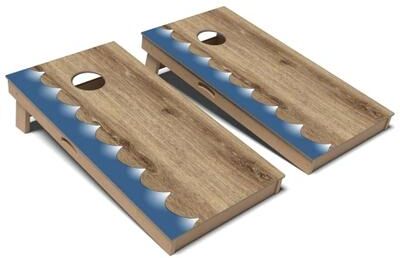
Skip's Garage Wave Surf Cornhole Board SetIncludes: (2) Cornhole Boards & (8) Bags. Easily Choose Your Board Size & Type. Bags Will Complement The Board Colors. Easily Message Us Bag Color Requests. Add Accessories like Carry Cases or LED Hole Lights.263,99 $*Shipping: 0,00 $Secure redirect to the provider
-
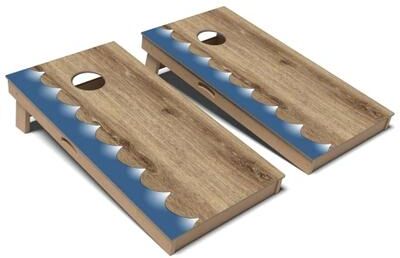
Skip's Garage Wave Surf Cornhole Board SetIncludes: (2) Cornhole Boards & (8) Bags. Easily Choose Your Board Size & Type. Bags Will Complement The Board Colors. Easily Message Us Bag Color Requests. Add Accessories like Carry Cases or LED Hole Lights.314,99 $*Shipping: 0,00 $Secure redirect to the provider
-
How are message in a bottle, ocean currents, and tides related?
Messages in a bottle, ocean currents, and tides are related through the movement of water in the ocean. When a message in a bottle is thrown into the ocean, it can be carried by ocean currents, which are large-scale movements of water caused by factors such as wind, temperature, and salinity. These currents can also be influenced by tides, which are the rise and fall of sea levels caused by the gravitational pull of the moon and the sun. Therefore, messages in a bottle can be carried by ocean currents and tides, traveling long distances across the ocean. **
-
Was the Korean War a proxy war or a civil war?
The Korean War was a proxy war, as it was fought between the communist-backed North Korea and the capitalist-backed South Korea, with support and involvement from other major powers such as the United States, China, and the Soviet Union. The conflict was not solely an internal struggle within Korea, but rather a larger geopolitical struggle between the two opposing ideologies of communism and capitalism. The involvement of outside powers and the global implications of the war make it more accurately described as a proxy war rather than a civil war. **
-
Can you surf with an ironing board?
While it is technically possible to surf with an ironing board, it is not recommended or safe. Ironing boards are not designed for surfing and lack the necessary buoyancy, stability, and maneuverability required for surfing. It is important to use proper surfboards that are specifically designed for riding waves to ensure a safe and enjoyable surfing experience. **
-
Is the First World War a modern war?
Yes, the First World War is considered a modern war due to the use of advanced technology and tactics that were unprecedented at the time. The war saw the introduction of new weapons such as tanks, airplanes, and chemical warfare, which changed the nature of warfare. Additionally, the scale of the conflict involving multiple countries and resulting in millions of casualties marked a departure from previous wars in terms of its global impact and devastation. Overall, the First World War is seen as a turning point in military history towards modern warfare. **
* All prices are inclusive of VAT and, if applicable, plus shipping costs. The offer information is based on the details provided by the respective shop and is updated through automated processes. Real-time updates do not occur, so deviations can occur in individual cases. ** Note: Parts of this content were created by AI.