Buy surfclub.eu ?
We are moving the project
surfclub.eu .
Are you interested in purchasing the domain
surfclub.eu ?
domain@kv-gmbh.de · 0541-91531010
Buy surfclub.eu ?
What area will be covered by 3419 m3 of sand when piled 325 m high?
To determine the area covered by 3419 m3 of sand when piled 325 m high, we need to calculate the base area of the pile. The formula for the volume of a rectangular prism is V = lwh, where l is the length, w is the width, and h is the height. Given that the volume is 3419 m3 and the height is 325 m, we can rearrange the formula to solve for the base area. Once we have the base area, we can determine the dimensions of the base (length and width) and calculate the total area covered by the sand pile. **
Which ground area will be covered by 3419 m3 of sand piled up 325 m high?
To determine the ground area covered by 3419 m3 of sand piled up 325 m high, we need to calculate the base area of the sand pile. This can be done by dividing the volume of the sand by the height of the pile. Therefore, the ground area covered by 3419 m3 of sand piled up 325 m high would be approximately 10.5 square meters. **


Similar search terms for 3419
Top-Angebote
Products related to 3419:
-
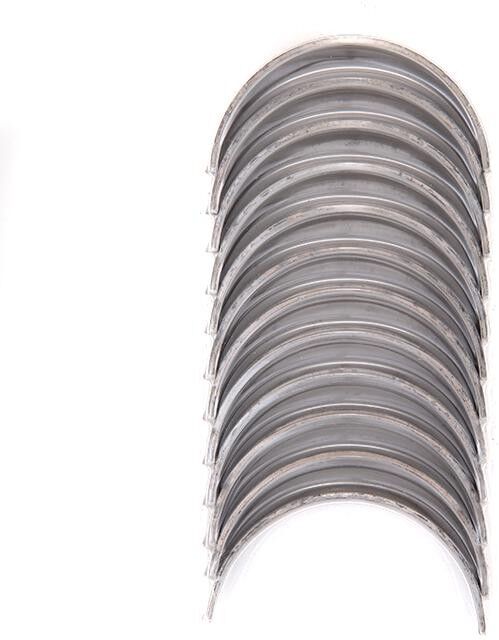
GLYCO 71-3419/6 STD Big End BearingsSupplementary Article / Supplementary Info Info 2: Bronze coated steel back; Width [mm]: 18; for bearing clearance from [mm]: 0,02; for bearing clearance up to [mm]: 0,08; for housing diameter from [mm]: 48; for shaft diameter from [mm]: 44,975; for shaft diameter to [mm]: 44,991; for housing diameter up to [mm]: 48,016; Surface: Galvanically coated; Standard Size [STD]: ; Thickness: 1,493; TecDoc Engine Number: 28336, 28337, 28335, 28330, 28338, 28339, 28340, 28341, 28342, 28343, 28344, 28347, 28348, 28375, 28376, 28380, 28377, 28378, 28329, 28331, 28334, 28345, 28346, 28384, 28382, 28381, 28383, 28385, 31205, 35249, 426, 21795, 28215, 28217, 32657, 37576, 32495; Construction Year to: 09/1987, 12/1986, 08/1992, 08/1998; Construction Year from: 09/1987, 01/1987, 12/1986, 09/1992, 09/1998; Engine Code: M20 B20 (206KA)33,49 £*Shipping: 8,45 £Secure redirect to the provider

-
What area will be covered by 3419 m3 of sand, which is piled 325 m high?
To calculate the area covered by 3419 m3 of sand piled 325 m high, we need to divide the volume of the sand by the height of the pile. This will give us the base area of the pile. So, 3419 m3 / 325 m = 10.5 m2. Therefore, the sand will cover an area of 10.5 square meters. **
-
What area will be covered by 3419 m3 of sand that is piled 325 m high?
To determine the area covered by 3419 m3 of sand piled 325 m high, we need to calculate the base area of the sand pile. The formula to find the base area of a cone, which is similar to a pile of sand, is A = πr^2, where r is the radius of the base. Given the volume of sand and height of the pile, we can calculate the radius of the base using the formula for the volume of a cone: V = (1/3)πr^2h. Once we find the radius, we can calculate the base area using the formula A = πr^2. **
-
Which ground area will be covered by 3419 m3 of sand, which is piled up 325 m high?
To determine the ground area covered by 3419 m3 of sand piled up 325 m high, we need to calculate the base area of the sand pile. This can be done by dividing the volume of the sand by the height of the pile. So, the base area covered by 3419 m3 of sand piled up 325 m high would be 3419 m3 / 325 m = 10.5 m2. **
-
What is the difference between beach, shore, and coast?
The beach refers to the area of sand or pebbles along the shoreline where people can relax, play, or swim. The shore is the area where the land meets the water, including beaches, cliffs, or rocky areas. The coast is a broader term that encompasses the entire area where the land meets the sea, including beaches, shores, cliffs, and any other features along the coastline. **


Do ocean currents always move in the direction of the tides?
No, ocean currents do not always move in the direction of the tides. While tides are primarily caused by the gravitational pull of the moon and the sun, ocean currents are influenced by a variety of factors such as wind patterns, temperature differences, and the Earth's rotation. Therefore, ocean currents can move in different directions than the tides, and their movements are more complex and varied. **
How are message in a bottle, ocean currents, and tides related?
Messages in a bottle, ocean currents, and tides are related through the movement of water in the ocean. When a message in a bottle is thrown into the ocean, it can be carried by ocean currents, which are large-scale movements of water caused by factors such as wind, temperature, and salinity. These currents can also be influenced by tides, which are the rise and fall of sea levels caused by the gravitational pull of the moon and the sun. Therefore, messages in a bottle can be carried by ocean currents and tides, traveling long distances across the ocean. **
Top-Angebote
Products related to 3419:
-
A.B.S. 3419-S Brake drumInner brake drum diameter [mm]: 180; Inner brake drum height [mm]: 40; Total brake drum height [mm]: 58; Rim Hole Number: 4; Wheel Hub Diameter [mm]: 63; Outer brake drum diameter [mm]: 220; Bolt Hole Circle Ø [mm]: 100; Fitting Position: Rear Axle; Braking/Driving Dynamics: for vehicles without ABS; Vehicle type: Getz76,98 £*Shipping: 8,45 £Secure redirect to the provider
-
SWAG 33 10 3419 Lambda sensorOxygen Sensor: Heated; Oxygen Sensor: Diagnostic Probe; External Thread Size: M18x1,5; Spanner Size: 22; Number of connectors: 4; Cable Length [mm]: 720; Weight [kg]: 0,098; Fitting Position: after catalytic converter, Left, before catalytic converter, Right; Emissions Standard: Euro 3 (D3); Left-/right-hand drive vehicles: for right-hand drive vehicles, for left-hand drive vehicles; Model Year to: 2005, 2004, 200647,49 £*Shipping: 8,45 £Secure redirect to the provider
-
GLYCO 71-3419/6 STD Big End BearingsSupplementary Article / Supplementary Info Info 2: Bronze coated steel back; Width [mm]: 18; for bearing clearance from [mm]: 0,02; for bearing clearance up to [mm]: 0,08; for housing diameter from [mm]: 48; for shaft diameter from [mm]: 44,975; for shaft diameter to [mm]: 44,991; for housing diameter up to [mm]: 48,016; Surface: Galvanically coated; Standard Size [STD]: ; Thickness: 1,493; TecDoc Engine Number: 28336, 28337, 28335, 28330, 28338, 28339, 28340, 28341, 28342, 28343, 28344, 28347, 28348, 28375, 28376, 28380, 28377, 28378, 28329, 28331, 28334, 28345, 28346, 28384, 28382, 28381, 28383, 28385, 31205, 35249, 426, 21795, 28215, 28217, 32657, 37576, 32495; Construction Year to: 09/1987, 12/1986, 08/1992, 08/1998; Construction Year from: 09/1987, 01/1987, 12/1986, 09/1992, 09/1998; Engine Code: M20 B20 (206KA)33,49 £*Shipping: 8,45 £Secure redirect to the provider
-
What area will be covered by 3419 m3 of sand when piled 325 m high?
To determine the area covered by 3419 m3 of sand when piled 325 m high, we need to calculate the base area of the pile. The formula for the volume of a rectangular prism is V = lwh, where l is the length, w is the width, and h is the height. Given that the volume is 3419 m3 and the height is 325 m, we can rearrange the formula to solve for the base area. Once we have the base area, we can determine the dimensions of the base (length and width) and calculate the total area covered by the sand pile. **
-
Which ground area will be covered by 3419 m3 of sand piled up 325 m high?
To determine the ground area covered by 3419 m3 of sand piled up 325 m high, we need to calculate the base area of the sand pile. This can be done by dividing the volume of the sand by the height of the pile. Therefore, the ground area covered by 3419 m3 of sand piled up 325 m high would be approximately 10.5 square meters. **
-
What area will be covered by 3419 m3 of sand, which is piled 325 m high?
To calculate the area covered by 3419 m3 of sand piled 325 m high, we need to divide the volume of the sand by the height of the pile. This will give us the base area of the pile. So, 3419 m3 / 325 m = 10.5 m2. Therefore, the sand will cover an area of 10.5 square meters. **
-
What area will be covered by 3419 m3 of sand that is piled 325 m high?
To determine the area covered by 3419 m3 of sand piled 325 m high, we need to calculate the base area of the sand pile. The formula to find the base area of a cone, which is similar to a pile of sand, is A = πr^2, where r is the radius of the base. Given the volume of sand and height of the pile, we can calculate the radius of the base using the formula for the volume of a cone: V = (1/3)πr^2h. Once we find the radius, we can calculate the base area using the formula A = πr^2. **
Similar search terms for 3419
-
Skip's Garage Surf Board Beach Cornhole Boards"Includes: (2) Cornhole Boards & (8) Bags. Boards are Regulation Sized 24"" Wide x 48"" Long. Bags Will Complement The Board Colors. Easily Message Us Bag Color Requests. Easily Add a Carry Cases, Lights, or Both!"252,99 $*Shipping: 0,00 $Secure redirect to the provider
-
Skip's Garage Surf Board Beach Cornhole Boards"Includes: (2) Cornhole Boards & (8) Bags. Boards are Regulation Sized 24"" Wide x 48"" Long. Bags Will Complement The Board Colors. Easily Message Us Bag Color Requests. Easily Add a Carry Cases, Lights, or Both!"304,49 $*Shipping: 0,00 $Secure redirect to the provider
-
Which ground area will be covered by 3419 m3 of sand, which is piled up 325 m high?
To determine the ground area covered by 3419 m3 of sand piled up 325 m high, we need to calculate the base area of the sand pile. This can be done by dividing the volume of the sand by the height of the pile. So, the base area covered by 3419 m3 of sand piled up 325 m high would be 3419 m3 / 325 m = 10.5 m2. **
-
What is the difference between beach, shore, and coast?
The beach refers to the area of sand or pebbles along the shoreline where people can relax, play, or swim. The shore is the area where the land meets the water, including beaches, cliffs, or rocky areas. The coast is a broader term that encompasses the entire area where the land meets the sea, including beaches, shores, cliffs, and any other features along the coastline. **
-
Do ocean currents always move in the direction of the tides?
No, ocean currents do not always move in the direction of the tides. While tides are primarily caused by the gravitational pull of the moon and the sun, ocean currents are influenced by a variety of factors such as wind patterns, temperature differences, and the Earth's rotation. Therefore, ocean currents can move in different directions than the tides, and their movements are more complex and varied. **
-
How are message in a bottle, ocean currents, and tides related?
Messages in a bottle, ocean currents, and tides are related through the movement of water in the ocean. When a message in a bottle is thrown into the ocean, it can be carried by ocean currents, which are large-scale movements of water caused by factors such as wind, temperature, and salinity. These currents can also be influenced by tides, which are the rise and fall of sea levels caused by the gravitational pull of the moon and the sun. Therefore, messages in a bottle can be carried by ocean currents and tides, traveling long distances across the ocean. **
* All prices are inclusive of VAT and, if applicable, plus shipping costs. The offer information is based on the details provided by the respective shop and is updated through automated processes. Real-time updates do not occur, so deviations can occur in individual cases. ** Note: Parts of this content were created by AI.