Buy surfclub.eu ?
We are moving the project
surfclub.eu .
Are you interested in purchasing the domain
surfclub.eu ?
domain@kv-gmbh.de · 0541-91531010
Buy surfclub.eu ?
What is the difference between a power take-off shaft and a drive shaft?
A power take-off (PTO) shaft is a type of drive shaft that transfers power from a vehicle's engine to an attachment or implement, such as a pump or generator. The main difference between a PTO shaft and a regular drive shaft is that a PTO shaft is specifically designed to transfer power to external equipment, while a drive shaft is typically used to transfer power within a vehicle's transmission or between different components of a vehicle. Additionally, PTO shafts are often detachable and can be connected and disconnected as needed, whereas a drive shaft is a permanent component of a vehicle's drivetrain. **
Why is it called James Bond 007? Why specifically 007?
The name "James Bond 007" comes from the code name and number assigned to the fictional character James Bond, a British secret service agent created by author Ian Fleming. The "007" designation is a reference to the fictional character's "license to kill" in the line of duty. The number "007" is meant to signify that Bond has the authority to use lethal force when necessary, and it has become an iconic part of the character's identity. **

Similar search terms for NTY-NPE-BM-007-Drive-shaft
Top-Angebote
Products related to NTY-NPE-BM-007-Drive-shaft:


-
Why are there no simple motorcycles with shaft drive or belt drive?
There are no simple motorcycles with shaft drive or belt drive because these systems are more complex and expensive to manufacture compared to chain drive systems. Chain drives are simpler, lighter, and more cost-effective, making them the preferred choice for most motorcycles. Additionally, chain drives offer easier maintenance and customization options, which are important factors for many motorcycle enthusiasts. Overall, the simplicity and efficiency of chain drives make them the more popular choice in the motorcycle industry. **
-
How many volts is the voltage at NPE?
The voltage at NPE, or Neutral Point of Electricity, is typically close to zero volts. This is because the NPE is the point in an electrical system where the neutral conductor is connected to the earth, and it is designed to be at or near ground potential. In a properly functioning electrical system, the voltage at the NPE should be very low, if not zero, to ensure the safety and proper functioning of the system. **
-
How to calculate the moment of inertia of the drive shaft?
To calculate the moment of inertia of the drive shaft, you need to know the mass of the shaft and its distribution along its length. The moment of inertia can be calculated using the formula I = ∫r^2 dm, where r is the distance from the axis of rotation to the element of mass dm. By integrating this formula over the entire length of the shaft, you can determine the moment of inertia of the drive shaft. Alternatively, you can also use the parallel axis theorem to calculate the moment of inertia if the shaft is not rotating about its center of mass. **
-
What is 007 as a fraction?
007 as a fraction is 7/1000. This is because the number 007 can be written as 7/10 and then simplified to 7/1000 by dividing both the numerator and denominator by 10. Therefore, 007 as a fraction is 7/1000. **

How do you calculate the moment of inertia of the drive shaft?
The moment of inertia of a drive shaft can be calculated using the formula for the moment of inertia of a solid cylinder, which is \( I = \frac{1}{2} m r^2 \), where \( m \) is the mass of the shaft and \( r \) is the radius of the shaft. If the drive shaft is not a solid cylinder, the moment of inertia can be calculated by summing the moments of inertia of its individual components using the parallel axis theorem. This involves calculating the moment of inertia of each component about its own center of mass and then adding the mass of each component multiplied by the square of the distance between its center of mass and the axis of rotation. **
Where does the license plate BM come from?
The license plate BM comes from Bermuda. **
Top-Angebote
Products related to NTY-NPE-BM-007-Drive-shaft:
-
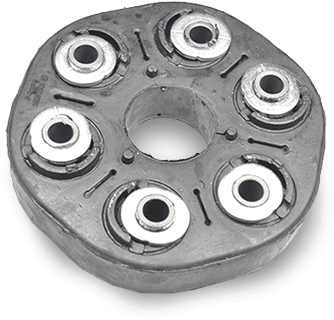
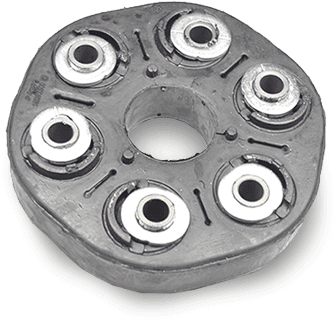
NTY NPE-BM-007 Drive shaft couplerFitting Position: Front; Observe service information: ; Inner Diameter [mm]: 53; Thickness: 38; Bolt Hole Circle Ø [mm]: 105; Number of Holes: 6; Material: Elastomer; for OE number: 26 11 1 229 065; Fabrication Number: NPE-BM-00728,99 £*Shipping: 8,45 £Secure redirect to the provider
-
What is the difference between a power take-off shaft and a drive shaft?
A power take-off (PTO) shaft is a type of drive shaft that transfers power from a vehicle's engine to an attachment or implement, such as a pump or generator. The main difference between a PTO shaft and a regular drive shaft is that a PTO shaft is specifically designed to transfer power to external equipment, while a drive shaft is typically used to transfer power within a vehicle's transmission or between different components of a vehicle. Additionally, PTO shafts are often detachable and can be connected and disconnected as needed, whereas a drive shaft is a permanent component of a vehicle's drivetrain. **
-
Why is it called James Bond 007? Why specifically 007?
The name "James Bond 007" comes from the code name and number assigned to the fictional character James Bond, a British secret service agent created by author Ian Fleming. The "007" designation is a reference to the fictional character's "license to kill" in the line of duty. The number "007" is meant to signify that Bond has the authority to use lethal force when necessary, and it has become an iconic part of the character's identity. **
-
Why are there no simple motorcycles with shaft drive or belt drive?
There are no simple motorcycles with shaft drive or belt drive because these systems are more complex and expensive to manufacture compared to chain drive systems. Chain drives are simpler, lighter, and more cost-effective, making them the preferred choice for most motorcycles. Additionally, chain drives offer easier maintenance and customization options, which are important factors for many motorcycle enthusiasts. Overall, the simplicity and efficiency of chain drives make them the more popular choice in the motorcycle industry. **
-
How many volts is the voltage at NPE?
The voltage at NPE, or Neutral Point of Electricity, is typically close to zero volts. This is because the NPE is the point in an electrical system where the neutral conductor is connected to the earth, and it is designed to be at or near ground potential. In a properly functioning electrical system, the voltage at the NPE should be very low, if not zero, to ensure the safety and proper functioning of the system. **
Similar search terms for NTY-NPE-BM-007-Drive-shaft
-
How to calculate the moment of inertia of the drive shaft?
To calculate the moment of inertia of the drive shaft, you need to know the mass of the shaft and its distribution along its length. The moment of inertia can be calculated using the formula I = ∫r^2 dm, where r is the distance from the axis of rotation to the element of mass dm. By integrating this formula over the entire length of the shaft, you can determine the moment of inertia of the drive shaft. Alternatively, you can also use the parallel axis theorem to calculate the moment of inertia if the shaft is not rotating about its center of mass. **
-
What is 007 as a fraction?
007 as a fraction is 7/1000. This is because the number 007 can be written as 7/10 and then simplified to 7/1000 by dividing both the numerator and denominator by 10. Therefore, 007 as a fraction is 7/1000. **
-
How do you calculate the moment of inertia of the drive shaft?
The moment of inertia of a drive shaft can be calculated using the formula for the moment of inertia of a solid cylinder, which is \( I = \frac{1}{2} m r^2 \), where \( m \) is the mass of the shaft and \( r \) is the radius of the shaft. If the drive shaft is not a solid cylinder, the moment of inertia can be calculated by summing the moments of inertia of its individual components using the parallel axis theorem. This involves calculating the moment of inertia of each component about its own center of mass and then adding the mass of each component multiplied by the square of the distance between its center of mass and the axis of rotation. **
-
Where does the license plate BM come from?
The license plate BM comes from Bermuda. **
* All prices are inclusive of VAT and, if applicable, plus shipping costs. The offer information is based on the details provided by the respective shop and is updated through automated processes. Real-time updates do not occur, so deviations can occur in individual cases. ** Note: Parts of this content were created by AI.